Colon Cancer Awareness Month and the Reality Behind the Numbers
March is Colon Cancer Awareness Month.
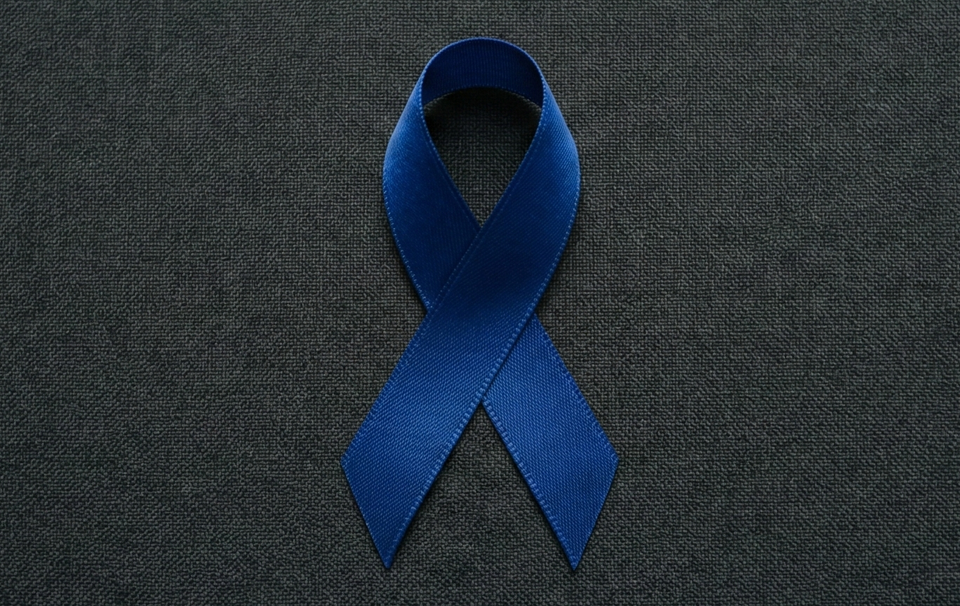
You will see the blue ribbon.
You will see reminders to get screened at 45.
You will see statistics shared across social media.
You should.
The numbers matter.
But this month is not abstract to me.
I had colon cancer.
And I had it before 45.
The Numbers Are Not Small
Colorectal cancer is the third most commonly diagnosed cancer in the United States.
It is the second leading cause of cancer-related death when men and women are combined.
More than 150,000 Americans will be diagnosed this year.
Over 50,000 people will die from it.
Rates in adults under 50 have been rising for years. That shift is significant enough that screening guidelines were lowered from age 50 to 45 for average-risk adults.
That change happened because the data demanded it.
I was not 45.
The Part That Took Three Years
I had symptoms for over three years before a doctor recommended a colonoscopy.
Three years.
When you are under 45, colon cancer is not high on the list of assumptions. It gets categorized as something else. Stress. Diet. Hemorrhoids. Something minor.
And most of the time, it is something minor.
But sometimes it is not.
Colon cancer often develops from polyps that grow slowly and quietly. Early stages may not cause dramatic symptoms.
When symptoms do appear, they can look ordinary:
- Changes in bowel habits
- Blood in the stool
- Persistent abdominal discomfort
- Fatigue
- Unintended weight loss
All things that can be rationalized.
The phrase “you are too young” creates a delay.
Delay changes outcomes.
I was fortunate that mine was eventually caught.
Not everyone gets that timing.
This Is Not Rare. It Is Visible.
Colorectal cancer has affected many people we recognize.
- Chadwick Boseman died at 43 after a private battle with colon cancer.
- James Van Der Beek died at 48 from colorectal cancer.
- Kirstie Alley died from colorectal cancer at 71.
- Jamie Samuelsen, a longtime Detroit sports radio host, died at 48 after publicly encouraging listeners to get screened.
Different ages. Different careers. Different visibility.
Same disease.
Famous or not, local or national, the biology does not change.
Why Screening Matters
Colon cancer is one of the most preventable cancers.
Most colorectal cancers begin as polyps. During a colonoscopy, those polyps can be identified and removed before they become cancerous.
That is prevention in action.
When colon cancer is caught early and confined to the colon, the five-year survival rate is around 90 percent.
When it spreads to distant organs, survival rates drop dramatically.
Early detection does not just improve outcomes. It transforms them.
Screening is not about fear.
It is about probability.
What Statistics Do Not Show
Statistics measure incidence, mortality, and trends.
They do not measure the uncertainty of living with unexplained symptoms.
They do not measure the moment a routine appointment becomes something else.
They do not measure the conversations with your family.
They do not measure how long you replay prior years in your head.
Numbers are clean.
Cancer is not.
I am here because mine was detected and treated.
That fact does not show up in a graph.
But it is the difference between survival and something else.
Why I Am Saying This During March
Awareness months can fade into background noise.
A ribbon.
A post.
A reminder that gets scrolled past.
Colon Cancer Awareness Month exists because this disease is common, because it is serious, and because in many cases it is preventable or highly treatable when caught early.
If you are 45 or older and have not scheduled a screening, do it.
If you are younger and experiencing symptoms, advocate for yourself.
If something persists, ask harder questions.
Three years is a long time to normalize something that is not normal.
If you are going through this or are worried about something and do not know who to talk to, you are welcome to reach out.
I am not a doctor. I will not give medical advice.
But I understand what it feels like to sit with uncertainty, and I am willing to listen.
Before March Ends
Do one practical thing.
Schedule an appointment.
Ask a question.
Encourage someone close to you to stop postponing theirs.
Colon cancer is not rare.
It is increasing in younger adults.
And when caught early, it is often highly treatable and sometimes preventable.
This month is not just about awareness for me.
It is a reminder that the numbers are real.
I was one of them.
And I am still here.
Sources
- American Cancer Society – Cancer Facts and Figures 2024
- U.S. Preventive Services Task Force – Colorectal Cancer Screening Recommendation
- National Cancer Institute – SEER Cancer Statistics Review
- Centers for Disease Control and Prevention – Colorectal Cancer Statistics
- Associated Press reporting on colorectal cancer cases involving Chadwick Boseman and James Van Der Beek




Comments ()